Butter churns are interesting implements used in the traditional process of making butter. They have a rich history dating back centuries and have played a crucial role in households, farms, and communities around the world.
A butter churn is a container or apparatus designed to agitate cream or milk until it separates into butter and buttermilk. It typically consists of a wooden or metal container with a handle or crank attached to a paddle or dasher inside. The churn is operated by hand, with the rhythmic up-and-down or back-and-forth motion creating the necessary agitation to transform cream into butter.
Butter Churns come in various shapes and sizes, reflecting the diverse cultural and regional practices of butter-making. They can range from simple hand-held churns used by individuals or small families to larger, more elaborate churns used in commercial settings.
Using a butter churn allows one to experience the traditional and time-honored method of producing butter. It connects us with our heritage, reminding us of the labor and craftsmanship involved in food preparation before the era of modern conveniences. Additionally, making butter with a Churn Offers a sensory experience, as the rhythmic motion and sound create a unique connection with the process.
The process of separating cream from milk involves a
technique called "centrifugation," which uses centrifugal force to
separate the cream from the milk.
Here are the steps
involved:
The milk is allowed
to stand still in a container for a period of time, typically for several
hours, to allow the cream to rise to the top.
Once the cream has risen to the top, a special device called
a centrifuge is used to separate the cream from the milk. The centrifuge works
by spinning the milk at a very high speed, which causes the cream to separate
from the milk and collect at the top of the centrifuge.
The separated cream is then skimmed off the top of the milk
and collected in a separate container.
The remaining milk can be further processed, pasteurized,
and homogenized, as needed, to produce various dairy products such as skim
milk, low-fat milk, or whole milk.
Overall, the process of separating cream from milk can vary
depending on the specific equipment and techniques used, but the basic principles
remain the same. Read more!!
Humanity is used to the idea of consuming animal-derived milk and dairy. We’ve been enjoying it since 8,000-10,000 BC. It’s been a cornerstone of our diets for ages. We value dairy for all the health benefits it brings, from filling us with energy to helping us build strong bones, develop muscles, improve our gut health and more. Milk boosts our immune system and works as an anti-inflammatory remedy and a probiotic.
Milk is still a very important part of the diet of people around the world—especially in poorer countries since it is a valuable source of calories and can help prevent issues in malnourished children. Many of us also just appreciate the taste of dairy products.
With that said, plant-based milk and dairy have become overwhelmingly popular lately. Today, cafes are expected to offer a range of plant-based milks for you to put in your coffee. And the amount of dairy products made of plant-based milk has increased significantly. In many places, it’s possible to find ice cream, fermented dairy, cheeses and other products made of plant-based milk.
In this article, we will try to figure out if plant-based milk can replace animal-derived milk in terms of health benefits.
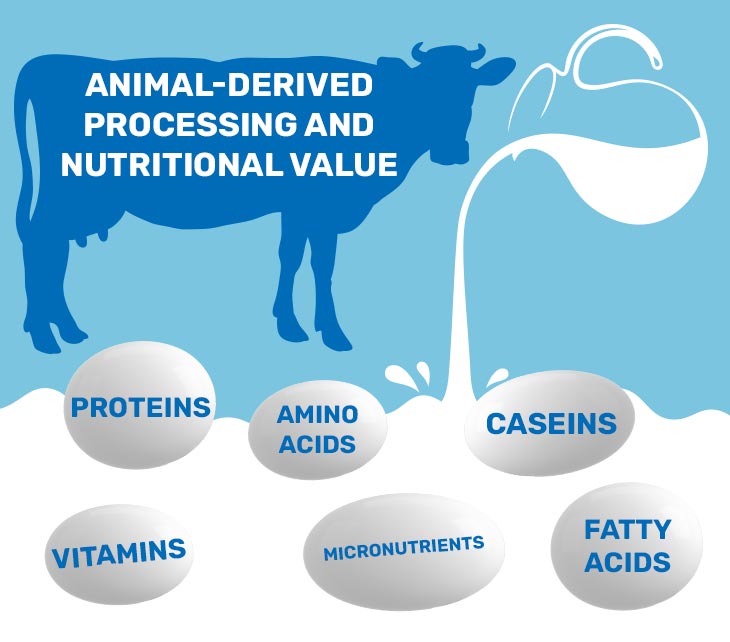
Animal-derived milk—processing and nutritional value
The value of animal milk is hard to overestimate. It’s clearly beneficial and it’s considered to be important to consume for a good reason. This product is rich in proteins, amino acids, fatty acids and numerous vitamins and micronutrients. We’ve recently conducted extensive research on all the health benefits and nutritional value of animal-derived milk. You can check it out here.
But there is another side of milk. When unpasteurized, it can cause health issues due to the harmful microorganisms it might contain. That’s why it’s mandatory in most countries to pasteurize milk gathered for sale. Small farms must pasteurize their dairy too—even if they’re selling it to just a couple of people. However, many people who gather milk for their own use avoid this step (usually because they believe that pasteurization makes milk less beneficial for their health and worsens its taste).
Here are our thoughts on whether pasteurized milk is better or worse than raw milk:
While that might be true, it largely depends on the method of pasteurization. The best one is Ultra-High Temperature (UHT) pasteurization. It requires heating milk to 135-150°C for just a few seconds. This method allows you to preserve as many nutrients and vitamins as possible and doesn’t change the milk’s taste.
It’s easy to pasteurize milk at home with a pasteurizer. You can also use this machine to make fermented dairy products! Check out our range of pasteurizers if you want to get one for your kitchen. And if you have any issues with choosing the most suitable one, you can always reach out to us.
As we learn more about all the benefits of animal-derived milk, a few questions arise: Why has plant-based milk become so popular? Why do people choose it instead of animal-derived milk? The simple answer is that plant-based milk can also bring many health benefits.
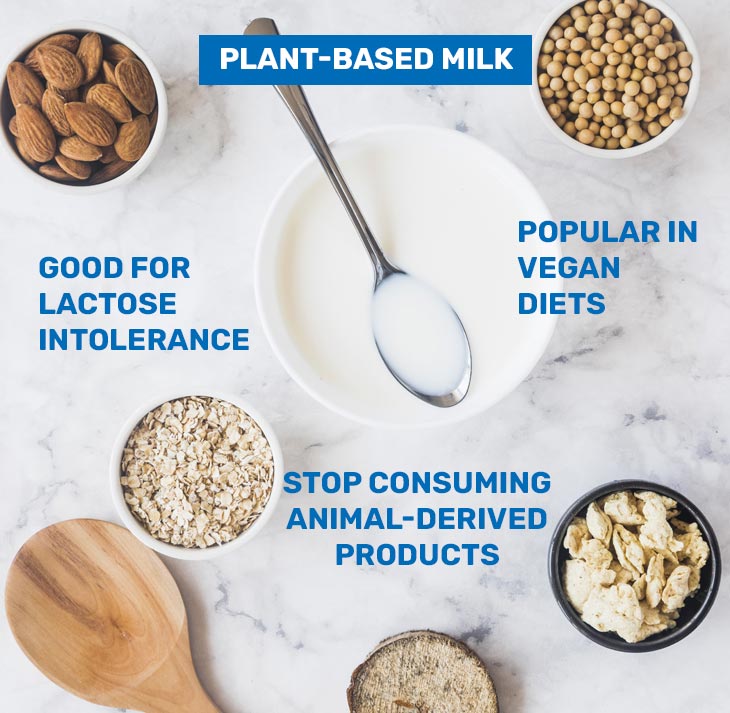
But there are other reasons why people switch to such milk. First of all, they might want to stop consuming animal-derived products altogether and go vegan for their own reasons. Secondly, some might simply like the taste of plant-based milk better.
Another reason would be lactose intolerance. People who are allergic to lactose (sugar that is found in milk) experience many unpleasant symptoms when consuming animal-derived dairy. That’s why they turn to plant-based alternatives. However, there are so many options for lactose-free animal-derived dairy that you don’t necessarily have to give up the taste and texture of traditional dairy.
Lastly, with vegetarian and vegan diets becoming so popular, plant-based milk has become trendy as well. As a result, some people switch to these drinks with the sole goal of following something that is considered to be in vogue.
Benefits of plant-based milk
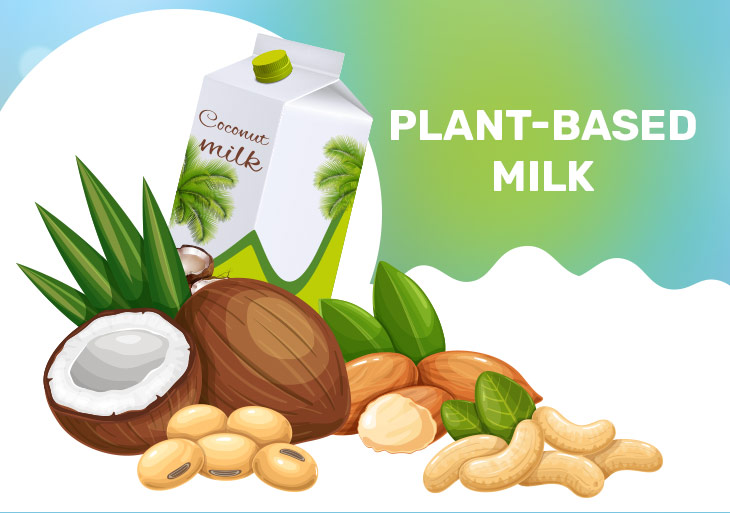
Plant-based milk can be divided into five types:
Cereal-based
Legume-based
Nut-based
Seed-based
Pseudocereal-based
Obviously, the health benefits of each type of plant-based milk come from the products each milk alternative is made of. For legumes, the benefits are that they’re rich in carbs, proteins, fiber, vitamins and minerals. Chickpeas are full of fibers, monosaccharides, disaccharides and oligosaccharides. Soy contains a lot of carbs, proteins, lipids, fatty acids and amino acids.
Seeds contain animal-like proteins (when heated, enzymatically treated or presented with acids, they behave like those found in animal-derived milk). Pumpkin seeds have a lot of lipids, protein and carbs. Flaxseed is rich in fatty acids. Often, seed-based milk is made of sesame seeds, but it’s not a very advantageous animal milk alternative, as sesame seeds lose quite a lot of health benefits when processed to become plant-based milk. When fermented with lactic acid β-glucosidase, though, sesame milk gains quite a strong antioxidant effect. That’s why it’s best to use this drink for making fermented dairy alternatives.
Cereal milk is quite popular too. Oats are high in fiber, vitamin E, β-glucan and polyunsaturated fatty acids. They also work well as a probiotic. Moreover, they contain flavonoids, carotenoids, phenolic acids and other bioactive phytochemicals. Rice is low in protein but high in nutrients. When fermented, it contains a lot of calcium, iron and magnesium, and works as a probiotic.
Nut milk is perhaps the most popular option. Almonds contain a lot of monounsaturated fatty acids, protein, fiber, manganese, vitamin E, antioxidants and more, which makes this milk alternative the healthiest plant-based milk. It’s also considered to be the best-tasting plant-based milk. Coconut milk can increase high-density lipoprotein, thus contributing to lowering cholesterol levels. It’s also a great alternative to animal-derived milk when it comes to making dairy products or cooking dishes that should contain dairy.
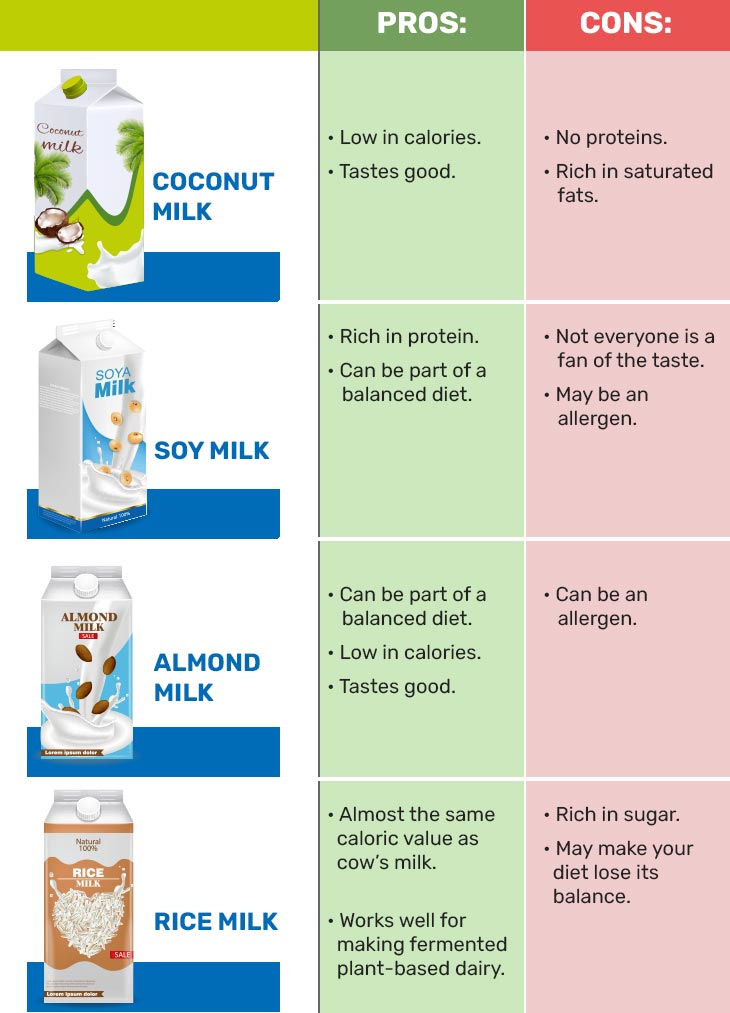
Let’s highlight some important facts about plant-based milk and animal-derived milk (we’re using cow’s milk as an example of animal milk):
Coconut milk
Pros:
Low in calories.
Tastes good.
Cons:
No proteins.
Rich in saturated fats.
Soy milk
Pros:
Rich in protein.
Can be part of a balanced diet.
Cons:
Not everyone is a fan of the taste.
May be an allergen.
Almond milk
Pros:
Can be part of a balanced diet.
Low in calories.
Tastes good.
Cons:
Can be an allergen.
Rice milk
Pros:
Almost the same caloric value as cow’s milk.
Works well for making fermented plant-based dairy.
The main concern is that industrial plant-based milks often contain quite a few undesirable ingredients such as preservatives, thickeners and sweeteners. They might cause issues for your digestive system. Pesticides and other things plants are often presented with might become a health hazard as plant-based milk is made. All that dangerous stuff will appear in your milk alternative. The best approach, in our opinion, is to make plant-based milk at home from ingredients that were checked for any harmful elements.
Also, remember that vegan milk is low in proteins, calcium and vitamin D. So if you decide to replace animal-derived milk with it, make sure to get enough of those micro and macronutrients from other foods or supplements.
The best plant-based milk for coffee
Now, let’s talk about the fun part: the taste. While everyone has their own favorite when it comes to flavor, plant-based milk hits differently when mixed with coffee in terms of both taste and texture. Also, different vegan milks behave differently when heated and introduced to the acidity of coffee.
Soy milk
Its taste is quite neutral, which is a good thing when it comes to adding it to your cup of coffee. It offers similar performance to animal-derived milk when heated. But it might curdle when presented with the acidity or the temperature of the coffee.
Almond milk
Its nutty and bitter taste can be a good addition to coffee. Almond milk adds a nice extra flavor, but due to the lower protein content, it’s quite watery. It can also split when added to coffee.
Coconut milk
This milk alternative is the best one in terms of texture. It’s creamy and dense, so it makes a good base for froth and foam. However, it’s quite sweet. That’s why those who love the acidic and bitter taste of coffee might not like adding coconut milk to their drink. Also, the bubbly foam of coconut milk fades quicker than that of animal-derived milk.
Oat milk
Taste-wise, this is the best partner for coffee thanks to its wheaty notes. It’s also rather thick and creamy, so it makes a good foam and stretches well. Unfortunately, it might curdle when combined with coffee.
Cashew milk
This milk alternative is quite expensive because of the priciness of cashew nuts. However, it is very similar to cow’s milk when it comes to creaminess. The nutty flavor complements the coffee quite deliciously, but it’s rather sweet, so if you love a bitter cup of coffee, cashew milk is not for you. The foam it creates is very bubbly and fades quickly while also having a “bubble bath” texture that many might find unpleasant.
Rice milk
It has a neutral taste that is good for not spoiling your favorite coffee. But rice milk is also quite watery, so if you’re craving an Americano with milk, add this alternative to espresso. This plant-based milk also performs poorly if you want to make some foam with it.
Final thoughts
Everyone should decide for themselves whether they want to stick to animal-derived milk or switch to vegan alternatives. It all comes down to your preferences in terms of diet and flavor. Plant-based milk can offer quite a lot of health benefits, but it all depends on the way a producer processes all those legumes, nuts, seeds or cereal.
As adamant lovers of homemade products, we want to encourage you to make your own plant-based milk at home—especially since it’s rather easy to make!
Ten glories agone, humans domesticated a small herd of the wild ox in the Near East. And nearly times latterly, they started abusing them. Also, humanity’s preoccupation with cow milk has spread into a multi-billion bone assiduity and is still growing.
Ever since us clever homo sapiens figured out we could drink cow milk, the natural fact that milk separates naturally from cream has been part of that computation. We’ve figured out how to make adulation, ice cream (yum), rubbish, kefir, and more lately, whey protein maquillages and probiotic yogurts.
Still, you’re most likely part of that assiduity, If you’re reading this. Dairy processing shops are a necessary link between growers and consumers. And part of that process is the separation of millions of gallons of skimmed milk from the cream.
Cream Separators are hard-working, vital pieces of the outfit in your factory. But they were not cheap. In this blog, we’ll review what exactly a cream separator is, how it works, and how to land a high-quality cream division while staying within your budget.
What is a dairy Cream Separator?
A milk and cream separator is an extremely effective piece of artificial outfit that uses centrifugal force to remove cream from whole milk.
Similar separation is possible because, as those ancient humans noticed thousands of times agone, milk and cream naturally like to separate.
Remember the expression, “ You look like the cat who got the cream?” A mouser who waited long enough could sneak up to a pail of milk on a family ranch and simply master the cream off of the top. Milk cream separators when left to their own bias because they've different consistency. The cream is lighter, milk is heavier. How does a dairy cream separator work?
Just as graveness acts to naturally separate the milk and the cream, cream separators do the same thing — but much more snappily. As mentioned ahead, cream partitions use centrifugal force by feeding the raw milk into a central spinning chamber.
Within this chamber are conical fragment heaps that rotate in a barrel, creating centrifugal force thousands of times stronger than graveness. The fat within the milk stays within the center of the barrel, and the heavier skimmed milk is pushed to the external edges. In this way, a separation process that could take all night if left to nature is achieved in seconds.
Really, artificial milk processing — at the rates ultramodern shops run — would be insolvable without cream partitions. Cream separators guarantee milk fat thickness, and can also be modified to help with explanation and the junking of foreign objects and pathogens.
Note: Though we started this composition talking about cow milk, cream separators work extremely efficiently for scapegoat milk as well. In fact, using a cream division for scapegoat milk is indeed more important than for cow milk, as scapegoat milk cream has lower fat droplets, and therefore scapegoat cream separators at an important slower rate when left to graveness. What’s the most cost-effective way to purchase a reliable cream separator?
Like your mama might have told you when dragging you to the providence store before the first week of the academy, one secret to spending lower plutocrat is noway bought new. And this is true of the cream separator as well.
From both a time and plutocrat viewpoint, staying and paying for a brand new cream division is an extremely expensive process. Numerous name brands can take overtime to get you a new piece of an outfit. And if you need a new cream separator, you need its history.
That’s why our number one secret is to buy remanufactured.
The remanufactured outfit not only gets to you briskly but can bring up to 30 lower outspoken. What is a remanufactured cream separator?
The separator’s remanufacturing process starts with a complete disassembly of a used cream separation. Each and every part of the outfit is gutted, examined, and replaced or repaired if it doesn’t meet our norms. That means every bolt, spring, slice, stopcock, and frame of our remanufactured cream separator is like new and passes our rigorous quality norms.
For each remanufactured cream division, we also flatter ourselves in supplying an estimate of its mileage consumption, so that you know your functional costs moving forward. How can I ensure my cream separator is running at its most efficiently?
Running a cost-effective cream division isn't only about outspoken costs, but also the effectiveness of its day-to-day operation. This is why we recommend training each and every hand in stylish practices for starting and stopping your cream division outfit, as well as CIP protocols and troubleshooting.
Consider reaching us about our consulting and customized training programs, to ensure your people aren’t making time-and plutocrat-wasting crimes.
We also largely suggest that you upgrade the robotization of your cream partitions. Robotization technology is perfecting every month and can have an exceptional impact on outfit effectiveness.
How can I ensure my cream separator will last as long as possible?
Regular cream separator conservation should be about 2x/ time, and can significantly extend the lifetime of the outfit. We happily record conservation around factory time-out and work with you to help product detainments as much as possible.
We also have 24/7 phone response in case of extremities. We give same-day shipping on the relief corridor, and our platoon of technicians is ready and willing to fly directly to you to give expert in-person service.
Make the most of tight margins.
The dairy assiduity is extremely competitive, and paying further than necessary for essential equipment just doesn’t make sense.
Communicate with us to get more information on remanufactured cream separators. Our experts are always ready to dive in and discuss how to optimize your equipment, save you money, and keep your plant competitive.
Making dairy products by hand is too tough. So, if you manage a dairy farm, you must grasp the significance of each and every machine that is employed in the dairy industry. We will discuss the cream separator in this post, which is used to separate the cream from the milk.
With the advent of technology, any task can now be completed with the assistance of machines. If you want to start a dairy business, you must first grasp the importance of each machine that is utilized in the industry. Dairy equipment must be used with care in order to remain in good working order for a long time. Dairy machines contain a variety of equipment, including:
Cream Separators
Milk Pasteurizer
Butter churner
So, in this essay, we will go through the cream separator in great detail. If you want to start a dairy business, you should read this article attentively. First and foremost, you must learn how to use a milk cream separator.
What is a milk cream separator?
The milk cream separator is the most important piece of dairy equipment for separating milk from the cream. There are two types of separators on the market: manual and electric cream separators. Small business owners typically employ manual cream separators, but electric cream separators are used to create enough or too much cream from milk. The following are the main components of a separator:
Casing
Milk receiving tank
Electric Motor
Drum
Cream and skim milk receiver
The float chamber
To get the greatest quality product, you must verify all of the parts ahead of time. Let’s try to know the principles of the cream separators.
Principle of cream separators
Separators come in a variety of materials, productivity, and capacity, as we mentioned in the previous paragraph. Furthermore, you have the option of using a manual or electric cream separator, all of which operate similarly. These separate milk from cream, with the help of a drum and plates found in a milk separator. Separation of contaminants is also part of the separation process, which ensures that you get a high-quality product or cream.
The process of Separating Milk
If you’re using an electric cream separator, you’ll need to turn on the switch first and then wait for the engine to start correctly.
After that, pour roughly 1 liter of water into the cream separator before pouring the milk in.
After that, you must boil the milk at a high temperature for at least 2–3 minutes and repeat the process.
Separates the cream from the milk and stores it in the utensil at the end.
We'll walk you through some helpful hints for choosing the best cream
separator for your dairy business in this article.
The
capacity of a cream separator does not reflect the amount of milk that can
be processed.
When a
manufacturer claims that cream separators can separate 100 liters of
milk in an hour, this does not imply that it can separate 100 liters of milk.
The separators will become clogged with fat, grass particles, and other debris
over time. It is for this reason that the separator must be halted after 45
minutes of operation, the drum must be unwound, and the cream separator for
home use must be turned off. It will only take you 15 minutes.
Inquire with the manufacturer about what you should do while operating the
machine.
Plastic
isn't always the enemy.
Plastic in dairy equipment, on the other hand, is beneficial in a
variety of ways you may not have considered. Without a doubt, the plastic would
break easily and will not smell pleasant. Metal is popular among many
individuals.
Plastic, on the other hand, is a fantastic solution, and its use will
not disturb you in the least. This option is both less expensive and more
effective.
Check
the parts that come into contact with food.
Stainless steel is the best material for all of these alternatives.
Aside from that, anodized aluminum is an option. After that, you have the
option of choosing between aluminum and polycarbonate. You should avoid using
tin-plated pieces since the material can peel off and rust, lowering the
quality of the milk. As a result, make intelligent choices to ensure that the
end consumer receives high-quality milk and dairy products.
The
type of engine that is installed in the machine.
There are two types of engines: those with a brush and those without.
Electronics are present in brushless motors, which help to manage the engine
speed and can precisely react to voltage surges.
Brush engines are less complicated and do not have any electronics.
Furthermore, it allows you to alter the speed of action, which is ideal for
separation.
The motor with brushes is the best option because it is safe and does
not require a lot of electricity. As a result, the likelihood of the machine
breaking down is minimized.
Is
there a vacuity in fixing hooks in the division?
Fixing beaters are demanded safety purposes so that the division is
fixed to the milk
cream separator container. However, the division won't break and
the girding objects aren't going to get damaged, If someone hits it by
accident. The milk vessel has to fix hooks attached to it which increases the
stability.
In this article, we will discuss what a cream separator is, its purpose, and how it works. We will also go over the best cream separator machines on the market.
Scroll down to learn about each aspect in detail.
What Is a Cream Separator?
A cream separator is a machine that removes and separates the cream from whole cream.
Modern cream separators are automated and have the capability to produce milk of any fat content.
At a milk production plant, the cream is separated from the milk via a process called centrifugation. The milk is placed in a large bowl and rotated at a high speed until the cream is eliminated. This is what exactly a cream separator does.
A milk separator also acts as a clarifier because all the unnecessary particles that are heavier than skim milk (e.g. bacteria, sediment, somatic cells) are collected in pockets outside the separator.
Did you know that grocery store milk is homogenized? This means you cannot remove the cream from it. In the production process of milk, its fat globules are broken down to ensure that the particles amalgamate with the milk and don’t float on top.
But if you receive milk straight from a cow, skimming the cream is a hassle. It requires patience and dedication. How do you make cream from milk? A cream separator is the most convenient and reliable tool to skim cream.
The milk moves through the conical disks with a force equivalent to thousands of times the gravitational force.
Since the fat globules are the lighter part of the milk, they move to the drum’s heart, while the heavier skim milk goes to the sides as it separates from the fat. The whole process is dubbed cream-skimming.
Why Use a Cream Separator?
How do you separate cream from milk? Using a cream separator based on the principle of centrifugal force is the modern way to make cream from milk. It is a fantastic device that removes the cream from cow/goat/camel/sheep/etc. milk. How is cream made from a cream separator? Operating a milk separator is easy. You do not need any professional training.
Once you read the manual and understand the different buttons as well as their functions, you are ready to separate the milk.
A cream separator is a preferred choice if you are producing dairy milk and skim milk in bulk. The different components of a cream separator are durable and straightforward to clean.
How Does a Centrifugal Separator Work?
As discussed earlier, a centrifugal milk separator operates on the power of centrifugal force. Such a separator is popularly known as a centrifugal separator.
Now, let’s understand how it works. Centrifugal force is generated whenever a vessel that is filled with liquid (e.g. milk) is spun.
This is why a centrifugal separator is also called a disc bowl separator. The field creates centrifugal acceptation, and this isn’t as steady as gravity.
A centrifugal milk separator has baffle inserts in the form of conical discs. This increases the area of sedimentation.
When whole milk is inside the bowl, the centrifugal force runs through the baffle inserts, and the heavier part (e.g. cream) is separated. After the process, the milk and cream flow out of different spouts.
10 Best Cream Separator Machines on the Market
Are you considering investing in a cream separator machine but are baffled by the number of options on the market? Do not worry. In this article, we have rounded up the top-selling cream separators on the market.
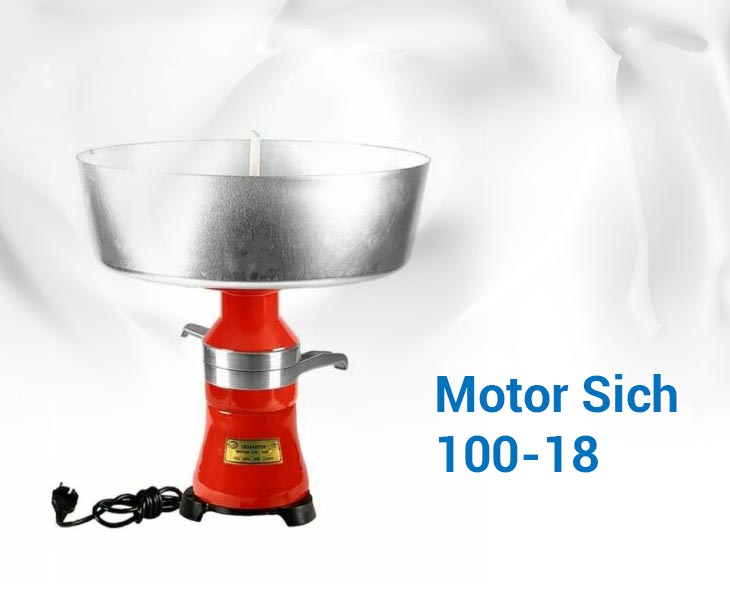
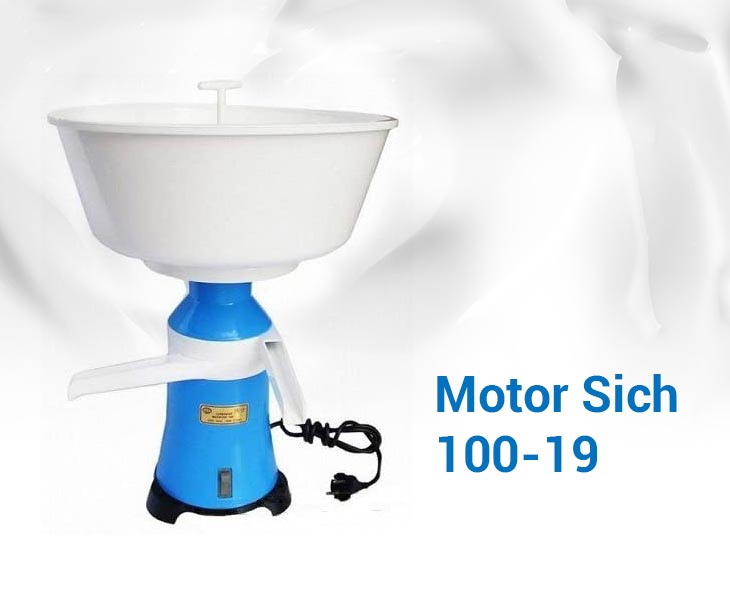
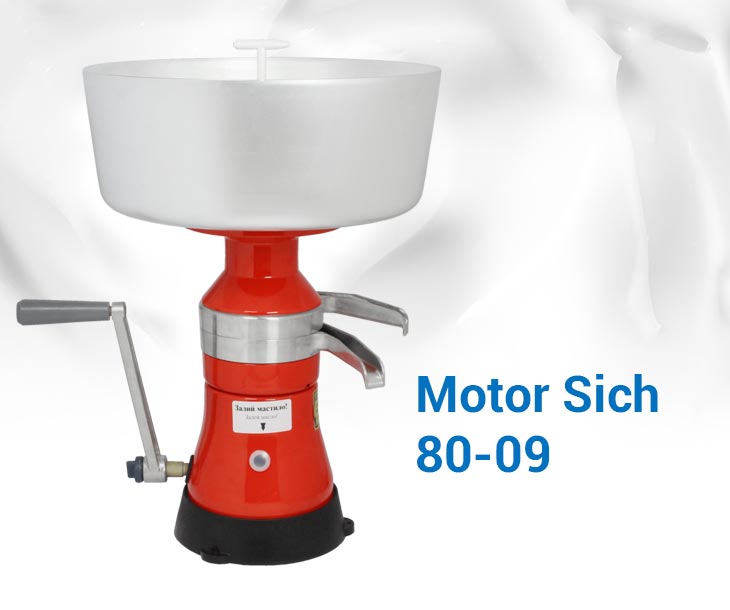
Motor Sich has manufactured an electric cream separator made of food-grade polycarbonate, thus ensuring healthy output every time.
The Motor Sich electric milk separator can skim milk from cows, goats, sheep, camels, and more. It has a capacity of 100 liters per hour. The Ukrainian motor comes with brushes that make it ideal for commercial use.
The only flaw we could find with this machine is that the polycarbonate structure makes it slightly heavier.
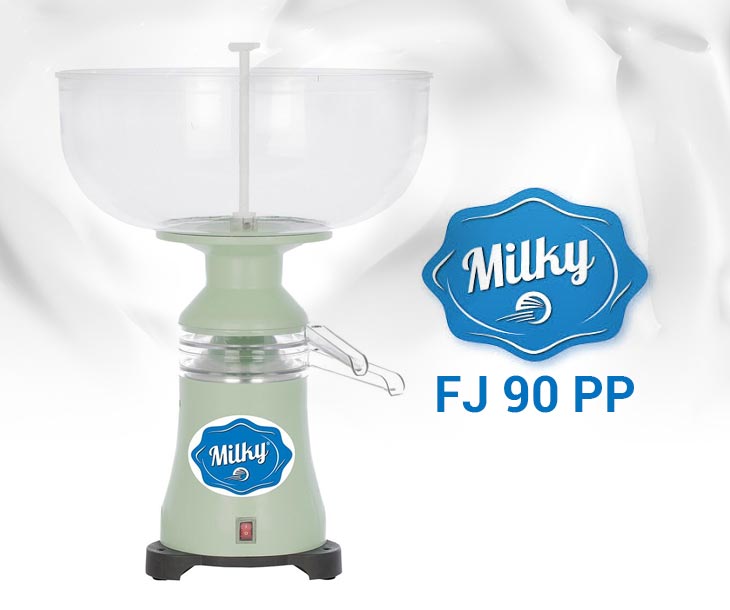
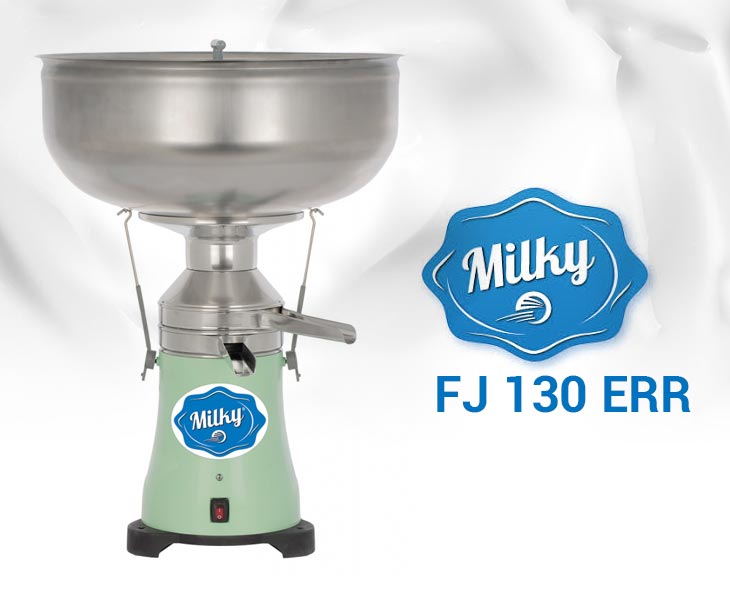
Your search for the best cream separator that is most efficient and easy-to-operate will end with the Milky FJ 90 PP. It gives an output of 80-100 liters/hour. The Milky FJ 90 PP mortar is durable, and the parts don’t rust with time. The components are made out of food-grade materials.
With an hourly output of 34 gallons per hour, this cream separator is insane. It has anodized aluminum disks for super durability. It is best suited for commercial use, separating anodized aluminum disks cream, sour cream, and low-fat milk. This machine is easier to operate, and the parts can be quickly assembled and disassembled.
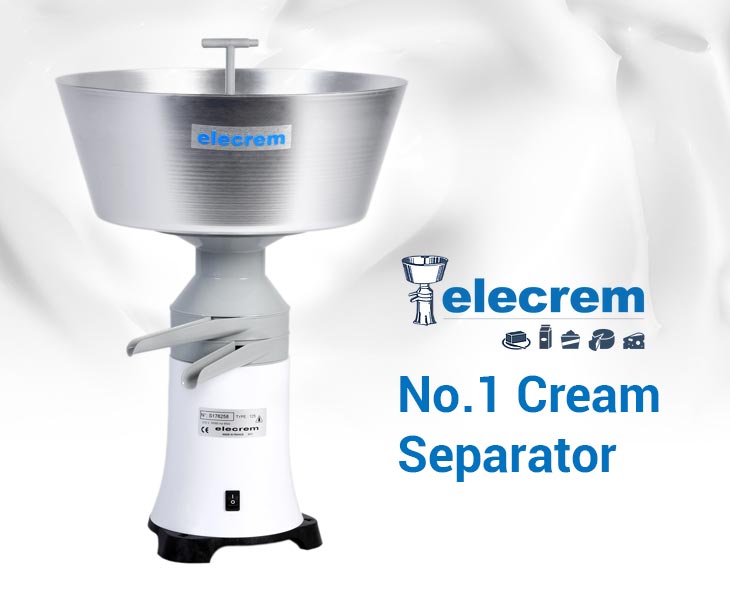
#5 Elecrem No.1 Cream Separator
The only flaw we could find with this machine is that the polycarbonate structure makes it slightly heavier.
Elecrem No.1 is an electric cream separator capable of generating tremendous speed to provide a good output compared to other models on the market. It ensures a thorough separation of cream and milk, delivering the finest-quality milk for consumption.
The machine can separate 125L of milk per hour and comes with a 10L capacity reservoir tank. It requires a voltage converter for use in the USA and Canada.
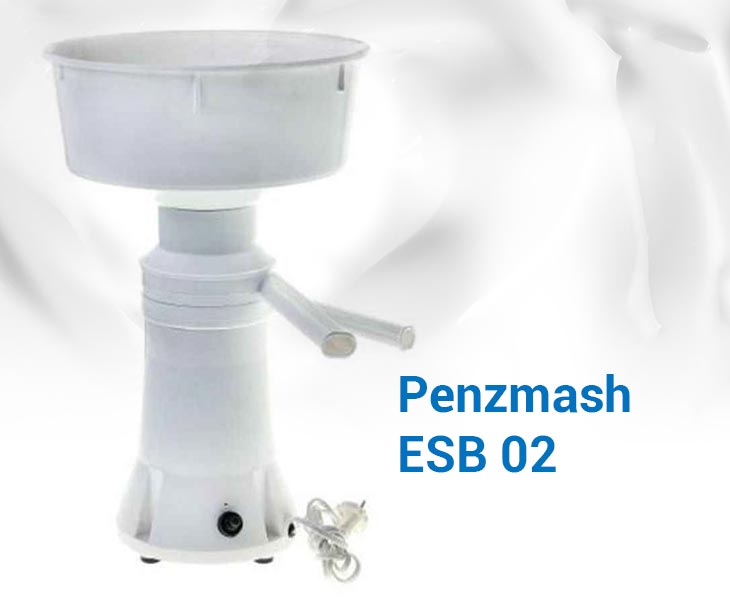
#6 Penzmash ESB 02
If you are searching for an affordable cream separator that skims 50 liters of milk per hour, the Penzmesh Cream Separator is a good choice. It has a durable construction. You do not need to worry about wear and tear.
This machine is straightforward to use. You will master its basic functionality in no time.
With 0.05% max fat in skimmed milk, this Aluminum alloy provides 80 – 100 liters/hour of output per hour. This hand-operated Motor Sich milk separator is preferred for regions with electricity issues. T8. Penzmash R3-OPS. Using this manually operated machine, you can make sour cream, and low-fat milk at home. This product is a perfect blend of quality and affordability.
The only drawback is that you will have to rotate the bowl by hand, so be ready to flex your muscles.
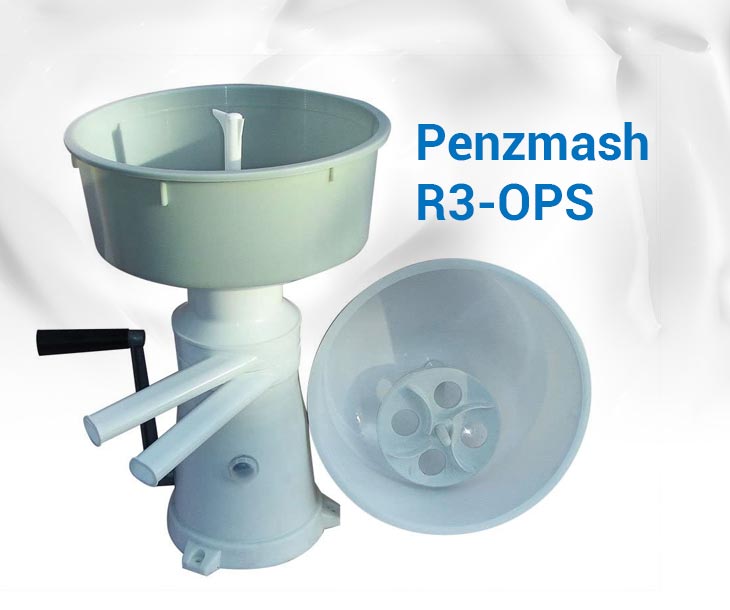
#8 Penzmash R3-OPS
This cream separator made with a maximum of 0.05% fat is suitable for both domestic and commercial use. Made of high-quality materials (aluminum alloy), this machine provides great durability.
From the installation to the usage, this milk separator offers real convenience.
The machine stays stable during operation. However, it is not the lightest milk separator on the market.
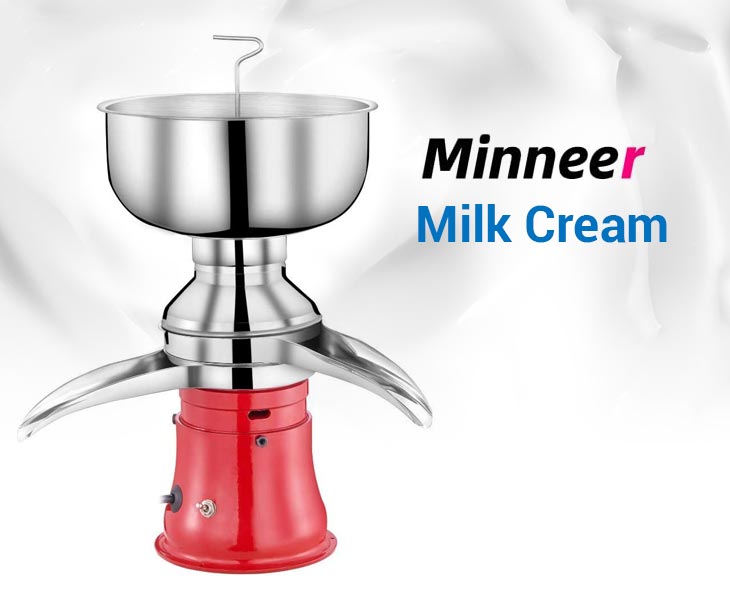
#9 Minneer Milk Cream
This stainless cream separator is versatile and convenient to use. The machine is fully automatic. Just switch it on, and it will start the cream separation with no manual effort.
It can skim 21 gallons of milk per hour. The various parts of this machine are slightly difficult to clean.
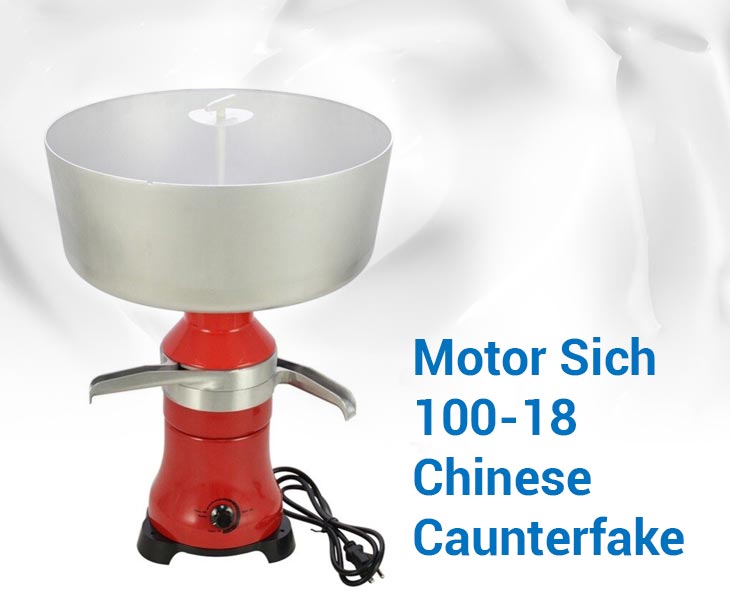
#10 Motor Sich 100-18 Chinese Caunterfake
Last on the list is the Motor Sich 100-18 cream separator.
It has a strong construction, as the parts of this cream separator machine are made out of good quality materials for excellent durability. So, it can handle rough and tough use. The installation process is a walk in the park (5-10 minutes).
Wrapping Up
Before making a purchase, it is of paramount importance to research the cream separator’s manufacturer and its market credibility. There are endless options for cream separators on Craigslist, but you should opt for one that is made of high-quality, food-grade material. It must be light in weight and therefore convenient to transport from one location to another.