Wednesday, May 11, 2022

DAIRY INNOVATION TRENDS 2022 FOR SMALL AND MEDIUM-SIZED FARMS

 Every year, a new development impacts the dairy industry. This year is no exception. There are plenty of new trends that can allow us to gain a better understanding of what our next move should be to bring customers exactly what they need. 

However, many of these trends are quite useless for small and medium-sized farms. So we decided to pick out only the most suitable trends for you to save your time and effort.

Sustainability

The main trend is dictated by the eco-friendly movement that’s been going on for years now. Small and medium-sized farms are already quite sustainable because they don’t have huge factories or herds that cause a negative impact on the environment. But there is always room for improvement.

Research from 2020 shows that 67% of consumers care about the health of our planet, and they prefer producers that have the same outlook. We can be sure that this number has only grown since then. Therefore, it’s vital to analyze the way you manage your farm and adjust it to the expectations of consumers.

51% of U.S. consumers care about animal welfare and wish to support farms that provide their animals with good conditions. So that would be a good place to start your journey toward sustainability. You can take a look at the way your kettle is handled and see if you can make any changes to make it less stressed and happier. Find inspiration from all those funny videos of cows scratching their backs on special brushes and playing with toys in a field. 

By the way, if you film your kettle having fun, it could be some nice social media content to promote your farm.

Thoughtful waste disposal, planting cover crops, protecting water and soil, and other ways to reduce your carbon footprint could also represent steps toward an even greener farm. 


Cognitive and mental health

The COVID-19 pandemic wreaked havoc on many people’s mental health. With more free time on our hands, we contemplated how to improve it. While it might not be the most obvious solution, dairy can have a positive impact on our mental health. Numerous studies show that more protein in our diet helps us be less anxious and depressed. Dairy is rich in protein. Also, milk contains the amino acid tryptophan that helps us sleep better, thus allowing us to feel more rested and improving our mental state.

It’s a good idea to market your dairy from this perspective since people keep looking for ways to improve their cognitive abilities and mental health. And we might see an increased demand for the main dairy foods because of this trend.

Learn from the experience of other farmers! Read this story about a small dairy farm in Norway to find new ideas for your workflow: https://milkyday.com/blog/2019/10/15/dairy-farm-from-norway-litlvea-gard/.


Physical health

Who doesn’t want to be healthy? Stress, fast food and the fast pace of life, amplified by the fact that people have less time and energy for exercise, impact our health negatively. Dairy is one of the best solutions for strengthening our bones, improving gut health and digestion, keeping our cardiovascular system in a good shape and much more. You can read about all the health benefits of dairy in one of our previous articles.

By raising awareness of the health benefits of dairy, small and medium-sized farms can attract more local consumers who are seeking ways to improve their wellbeing. If you aren’t selling yogurt and other fermented dairies yet, you should think about doing that, as these foods have even more health benefits. It’s easy to create fermented dairy using suitable bacteria and a milk pasteurizer

Check out our range of milk pasteurizers to find the one that fits the volume of dairy you produce. If you’re struggling to make the right choice, just drop us a line and we will help you out! https://milkyday.com/products/milk-pasteurizers

Packaging

This trend of dairy farming in the U.S. refers to the sustainability movement. Consumers want the packaging of their products to be more eco-friendly and, in the best-case scenario, reusable. The top dairy producers have to come up with something new to cater to this requirement because it’s not easy for them to offer reusable packaging. But small and medium-sized farms have a simple solution: good old glass jars. 

In all likelihood, you are already using them as packaging for your dairy products. You can also encourage your customers to bring the jars back to you so that you can clean them properly and reuse them. To assure them that this is safe, you can tell them in detail about the cleaning process and even show them how it works. Reusable packaging is a great way to sell more dairy in 2022.

Thinking about adding more machines to your farm? Check out our guide on milk processing equipment for small and medium-sized farms: https://milkyday.com/blog/2020/08/24/milk-processing-equipment-for-small-scale-dairy-farm/

Digitalization

This trend is huge in every industry—not only for milk farms in the U.S. Businesses around the world are doing their best to digitalize their processes in order to make them more efficient and better market their products. While implementing this tendency in a small or medium-sized dairy farm can be tricky, there are digital solutions that can ease your work.

From robotic milking to AI predictions and digital-based cattle management, technology can simplify the processes on your farm. That is precisely what it was created for: to take some of the load off our shoulders. Try searching for some solutions you could implement on your farm that would make your everyday routine easier for you as well as reduce the costs of your processes.

These are trends that are affecting the dairy industry in 2022. Some of them might be not new to you, as they’re influenced by tendencies that already existed before. And some may seem too difficult to implement into your workflow. However, something being a trend doesn’t mean you absolutely have to try it. On the other hand, it never hurts to find new ways to improve things both in terms of the work you need to do and the revenue you bring in. 

So look at this list of trends as tips and inspiration for upgrading your dairy farm and getting more customers.

Friday, March 11, 2022

Getting a Cost-Effective Cream Separator for your Dairy Plant

Ten glories agone, humans domesticated a small herd of the wild ox in the Near East. And nearly times latterly, they started abusing them. Also, humanity’s preoccupation with cow milk has spread into a multi-billion bone assiduity and is still growing. 

Ever since us clever homo sapiens figured out we could drink cow milk, the natural fact that milk separates naturally from cream has been part of that computation. We’ve figured out how to make adulation, ice cream (yum), rubbish, kefir, and more lately, whey protein maquillages and probiotic yogurts.
 

Still, you’re most likely part of that assiduity, If you’re reading this. Dairy processing shops are a necessary link between growers and consumers. And part of that process is the separation of millions of gallons of skimmed milk from the cream.  

Cream Separators are hard-working, vital pieces of the outfit in your factory. But they were not cheap. In this blog, we’ll review what exactly a cream separator is, how it works, and how to land a high-quality cream division while staying within your budget.   

What is a dairy Cream Separator?

A milk and cream separator is an extremely effective piece of artificial outfit that uses centrifugal force to remove cream from whole milk. 


Similar separation is possible because, as those ancient humans noticed thousands of times agone, milk and cream naturally like to separate.


Remember the expression, “ You look like the cat who got the cream?” A mouser who waited long enough could sneak up to a pail of milk on a family ranch and simply master the cream off of the top. Milk cream separators when left to their own bias because they've different consistency. The cream is lighter, milk is heavier.

How does a dairy cream separator work?


Just as graveness acts to naturally separate the milk and the cream, cream separators do the same thing — but much more snappily. As mentioned ahead, cream partitions use centrifugal force by feeding the raw milk into a central spinning chamber. 


Within this chamber are conical fragment heaps that rotate in a barrel, creating centrifugal force thousands of times stronger than graveness. The fat within the milk stays within the center of the barrel, and the heavier skimmed milk is pushed to the external edges. In this way, a separation process that could take all night if left to nature is achieved in seconds. 


Really, artificial milk processing — at the rates ultramodern shops run — would be insolvable without cream partitions. Cream separators guarantee milk fat thickness, and can also be modified to help with explanation and the junking of foreign objects and pathogens. 


Note: Though we started this composition talking about cow milk, cream separators work extremely efficiently for scapegoat milk as well. In fact, using a cream division for scapegoat milk is indeed more important than for cow milk, as scapegoat milk cream has lower fat droplets, and therefore scapegoat cream separators at an important slower rate when left to graveness.

What’s the most cost-effective way to purchase a reliable cream separator?
Like your mama might have told you when dragging you to the providence store before the first week of the academy, one secret to spending lower plutocrat is noway bought new. And this is true of the cream separator as well. 


From both a time and plutocrat viewpoint, staying and paying for a brand new cream division is an extremely expensive process. Numerous name brands can take overtime to get you a new piece of an outfit. And if you need a new cream separator, you need its history. 

That’s why our number one secret is to buy remanufactured. 


The remanufactured outfit not only gets to you briskly but can bring up to 30 lower outspoken.

What is a remanufactured cream separator?
The separator’s remanufacturing process starts with a complete disassembly of a used cream separation. Each and every part of the outfit is gutted, examined, and replaced or repaired if it doesn’t meet our norms. That means every bolt, spring, slice, stopcock, and frame of our remanufactured cream separator is like new and passes our rigorous quality norms. 


For each remanufactured cream division, we also flatter ourselves in supplying an estimate of its mileage consumption, so that you know your functional costs moving forward.

How can I ensure my cream separator is running at its most efficiently?

Running a cost-effective cream division isn't only about outspoken costs, but also the effectiveness of its day-to-day operation. This is why we recommend training each and every hand in stylish practices for starting and stopping your cream division outfit, as well as CIP protocols and troubleshooting. 


Consider reaching us about our consulting and customized training programs, to ensure your people aren’t making time-and plutocrat-wasting crimes.  

We also largely suggest that you upgrade the robotization of your cream partitions. Robotization technology is perfecting every month and can have an exceptional impact on outfit effectiveness. 


How can I ensure my cream separator will last as long as possible?

Regular cream separator conservation should be about 2x/ time, and can significantly extend the lifetime of the outfit. We happily record conservation around factory time-out and work with you to help product detainments as much as possible. 


We also have 24/7 phone response in case of extremities. We give same-day shipping on the relief corridor, and our platoon of technicians is ready and willing to fly directly to you to give expert in-person service.  

Make the most of tight margins.

The dairy assiduity is extremely competitive, and paying further than necessary for essential equipment just doesn’t make sense. 


Communicate with us to get more information on remanufactured cream separators. Our experts are always ready to dive in and discuss how to optimize your equipment, save you money, and keep your plant competitive.

Thursday, January 13, 2022

How To Use And Separate Goat Milk Thick Cream - Milky Day

Goat milk cream could be a natural product that comes from goat milk, however, unless you've got a milk cream separator a number of that cream goes to be pretty troublesome to get rid of.

Now that doesn't mean that you just cannot get the bulk of the cream of the goat milk, it simply implies that some are getting to be left behind.


The only downside is you may have to be compelled to either freeze the cream till you've got enough for your formula otherwise you are getting to have to be compelled to purchase a cream separator at the shop to supplement what comes off the goat milk.


How To Separate Goat Milk Thick Cream


As mentioned higher than, the best thanks to separate the cream from the goat milk is to use either a manual or electric cream separator.


These have come back a protracted manner in recent years and a tabletop version appropriate for a smaller quantity of milk is currently promptly accessible.


A cream centrifuge is largely a centrifugal device that separates the cream from the milk therefore you finish up with cream and milk.


There are each all-metal ones and ones that are made from plastic.


While the plastic ones are cheaper, my recommendation is to settle on one that's all metal therefore it lasts for years to come back.

Of course, must you decide to not pay the cash to shop for a cream separator, there's different to get rid of the cream from the goat milk.

Simply enable the goat milk to take a seat within the white goods nightlong or a minimum of between the morning and evening milking, then use a metal spoon to scoop off the maximum amount of the cream as you'll.

The cream will rise to the highest of the jar because the goat milk cools.

If you set your goat milk in an exceedingly clear glass instrumentality, it's simple to differentiate the cream from the goat milk as a result of the cream goes to make a thick darker white layer on the terribly prime of the goat milk.


When you take away the cream with a spoon it will appear reasonably thick and gloppy.


This is traditional.


Now by removing it employing a spoon, you're getting to miss some and additionally find yourself with a bit of milk within the cream. 


Tips For Separating Thick Cream From Goat Milk

I like to relax my goat milk in pint canning jars crammed not quite 1/2 full once I pasteurize the goat milk. 


While smaller amounts of milk mean there's a diluent layer of cream that forms on prime, I want this can be what works best on my behalf of me.

Now, if you retain your milk within the white goods for terribly long, or maybe freeze it, a thicker layer of cream would possibly type on prime of the goat milk, particularly if you probably did not savvy all scraped off with a spoon throughout your initial strive.

Just check the goat milk before you employ it and scrap off any that continues to be.

If you employ a cream separator for goat milk, however, this could not happen because the machine should take away all of the creams.

How To Use Thick Cream

There are several uses for cream.

Recipes like frozen desserts incorporate a combination of goat milk and cream.

Homemade topping needs the employment of cream.

Another fashionable use for cream is this goat milk butter formula.

Of course, there are different uses for cream likewise, and albeit, I favor taking away the cream from our goat milk before drinking it just because I don't just like the feel of the clod of cream once I drink it.

For people who favor laying aside their own cream and not using any factory-made cream in the least in their recipes, a simple thanks to trying this is to freeze the cream mistreatment identical technique wont to freeze goat milk.


Thursday, December 16, 2021

What are the principles of making cream with a cream separator?

Making dairy products by hand is too tough. So, if you manage a dairy farm, you must grasp the significance of each and every machine that is employed in the dairy industry. We will discuss the cream separator in this post, which is used to separate the cream from the milk.

With the advent of technology, any task can now be completed with the assistance of machines. If you want to start a dairy business, you must first grasp the importance of each machine that is utilized in the industry. Dairy equipment must be used with care in order to remain in good working order for a long time. Dairy machines contain a variety of equipment, including:

  • Cream Separators
  • Milk Pasteurizer
  • Butter churner

So, in this essay, we will go through the cream separator in great detail. If you want to start a dairy business, you should read this article attentively. First and foremost, you must learn how to use a milk cream separator.

What is a milk cream separator?

The milk cream separator is the most important piece of dairy equipment for separating milk from the cream. There are two types of separators on the market: manual and electric cream separators. Small business owners typically employ manual cream separators, but electric cream separators are used to create enough or too much cream from milk. The following are the main components of a separator:

  • Casing
  • Milk receiving tank
  • Electric Motor
  • Drum
  • Cream and skim milk receiver
  • The float chamber

To get the greatest quality product, you must verify all of the parts ahead of time. Let’s try to know the principles of the cream separators.

Principle of cream separators

Separators come in a variety of materials, productivity, and capacity, as we mentioned in the previous paragraph. Furthermore, you have the option of using a manual or electric cream separator, all of which operate similarly. These separate milk from cream, with the help of a drum and plates found in a milk separator. Separation of contaminants is also part of the separation process, which ensures that you get a high-quality product or cream.

The process of Separating Milk

  • If you’re using an electric cream separator, you’ll need to turn on the switch first and then wait for the engine to start correctly.
  • After that, pour roughly 1 liter of water into the cream separator before pouring the milk in.
  • After that, you must boil the milk at a high temperature for at least 2–3 minutes and repeat the process.
  • Separates the cream from the milk and stores it in the utensil at the end.

Wednesday, December 1, 2021

What factors should you consider when choosing the best cream separator?

We'll walk you through some helpful hints for choosing the best cream separator for your dairy business in this article.


  • The capacity of a cream separator does not reflect the amount of milk that can be processed.

When a manufacturer claims that cream separators can separate 100 liters of milk in an hour, this does not imply that it can separate 100 liters of milk. The separators will become clogged with fat, grass particles, and other debris over time. It is for this reason that the separator must be halted after 45 minutes of operation, the drum must be unwound, and the cream separator for home use must be turned off. It will only take you 15 minutes. Inquire with the manufacturer about what you should do while operating the machine. 


  • Plastic isn't always the enemy.

Plastic in dairy equipment, on the other hand, is beneficial in a variety of ways you may not have considered. Without a doubt, the plastic would break easily and will not smell pleasant. Metal is popular among many individuals. 

Plastic, on the other hand, is a fantastic solution, and its use will not disturb you in the least. This option is both less expensive and more effective.


  • Check the parts that come into contact with food.

Stainless steel is the best material for all of these alternatives. Aside from that, anodized aluminum is an option. After that, you have the option of choosing between aluminum and polycarbonate. You should avoid using tin-plated pieces since the material can peel off and rust, lowering the quality of the milk. As a result, make intelligent choices to ensure that the end consumer receives high-quality milk and dairy products.


  • The type of engine that is installed in the machine.

There are two types of engines: those with a brush and those without. Electronics are present in brushless motors, which help to manage the engine speed and can precisely react to voltage surges.

Brush engines are less complicated and do not have any electronics. Furthermore, it allows you to alter the speed of action, which is ideal for separation.

The motor with brushes is the best option because it is safe and does not require a lot of electricity. As a result, the likelihood of the machine breaking down is minimized.


  • Is there a vacuity in fixing hooks in the division?

Fixing beaters are demanded safety purposes so that the division is fixed to the milk cream separator container. However, the division won't break and the girding objects aren't going to get damaged, If someone hits it by accident. The milk vessel has to fix hooks attached to it which increases the stability.


Thursday, November 18, 2021

METHODS, TIME AND TEMPERATURE FOR PASTEURIZING MILK - MILKY DAY

While there is a lot of controversy around pasteurization, the milk we can find on supermarket shelves is always pasteurized. And in many countries, it’s mandatory even for small farms to process their dairy. That’s why — no matter what side you’re on — it’s important to know all the details about the process, time, and temperature for pasteurizing milk.

What Is Milk Pasteurization?

What Is Milk Pasteurization?

In general, pasteurization is a process of heating food or drinks to a certain temperature and time in order to kill all the germs that might cause illnesses. So if you’re wondering what can be pasteurized, the answer is…just about everything. Merely by cooking food, you’re basically processing it and killing all the harmful bacteria.

risk-from-raw-milk

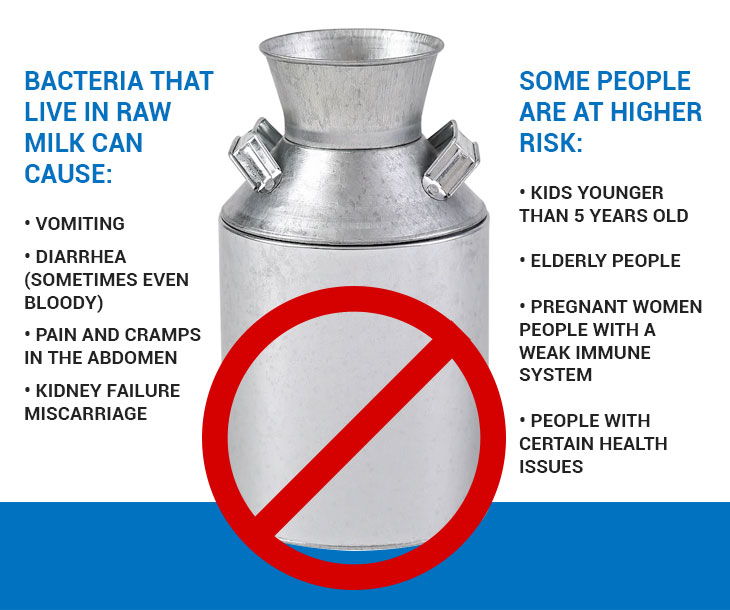
While a lot of people are not huge fans of processed milk, raw dairy products might cause:

  • Nausea and vomiting
  • Diarrhea
  • Pain or cramping in the abdomen
  • Kidney failure (in rare cases)
  • Miscarriage or death of an unborn baby

Some people are more vulnerable to the germs that raw milk might contain:

  • Kids below 5 years old
  • Elderly people
  • Pregnant women
  • People with immune system disorders (cancer, HIV, etc.)
  • People with certain health issues (diabetes, heart illnesses, etc.)

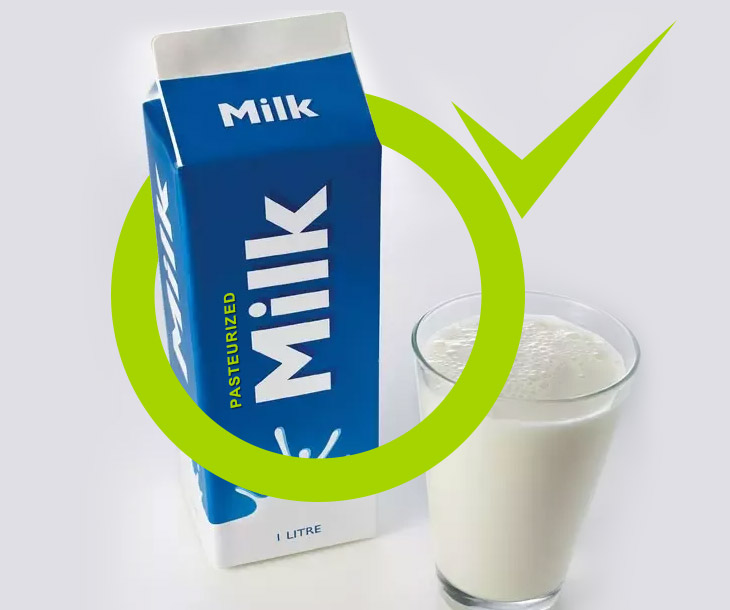
That’s why milk is made safe with pasteurization. These health risks are the reason many countries forbid the sale of raw dairy products. So often, both big manufacturers and small farms have to process their milk.

pasteurized-milk

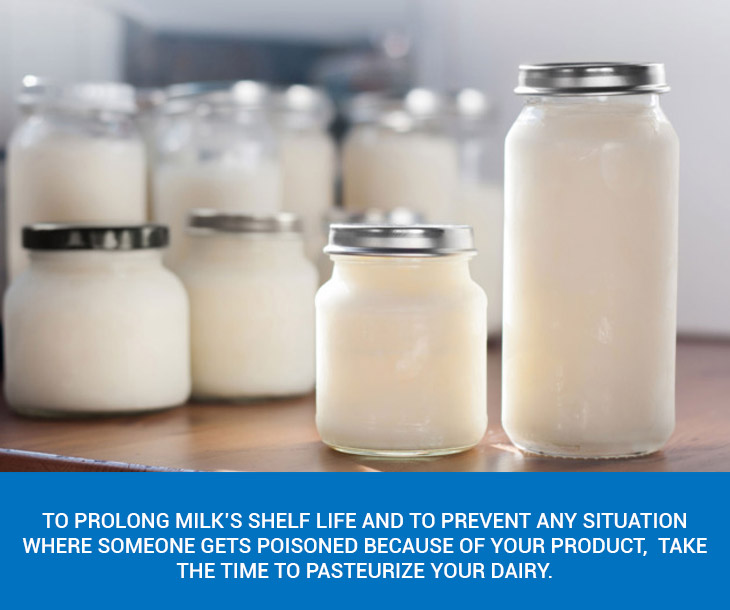
However, there are several countries where it’s not mandatory for farmers to pasteurize their dairy. If you buy milk from such retailers and are worried about its safety, you can easily process it at home. Also, the following instructions will be sufficient if you’re selling your dairy to locals and want to make sure no one gets sick.

Milk Pasteurization Process

Milk Pasteurization Process

What will you need:

  • double boiler. You can use a thick-bottomed pot as well, but there is a risk that milk will burn on the bottom or get heated unevenly.
  • A sterilized kitchen thermometer
  • A spatula or large spoon
  • An ice bath. Fill a sink or large bowl with ice water.

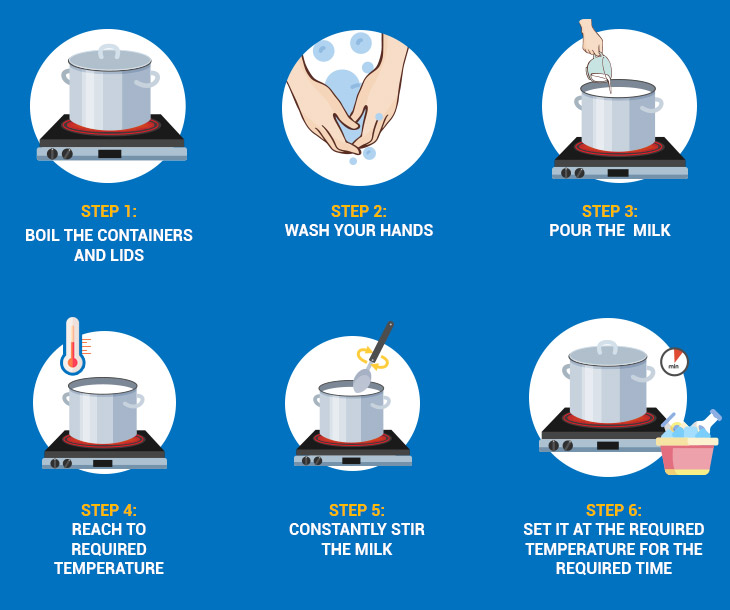
To begin the process, you need to clean the work area, wash your hands and sterilize the jars in which you’re going to keep the milk. You can sterilize containers by boiling them for a couple of minutes.

Once everything is clean, fill the bottom part of your double boiler with water and pour milk into the top part. You can use a regular pot too — just make sure you stir the milk the whole time so that it heats evenly and doesn’t burn. Put the double boiler or pot on the stovetop and turn the heat on low so that the milk heats up slowly. Use the thermometer to control the temperature. Once you reach the right temperature, keep the milk there for the required amount of time and then put it in an ice bath. Stir the milk so that it cools down faster, then pour it into jars and put it into the fridge.

Methods and Temperature for Pasteurizing Milk

Methods and Temperature for Pasteurizing Milk

The temperature for pasteurizing milk depends on the method you choose. The most popular methods are low temperature, HTST (high temperature, short time) and ultra-high temperature.

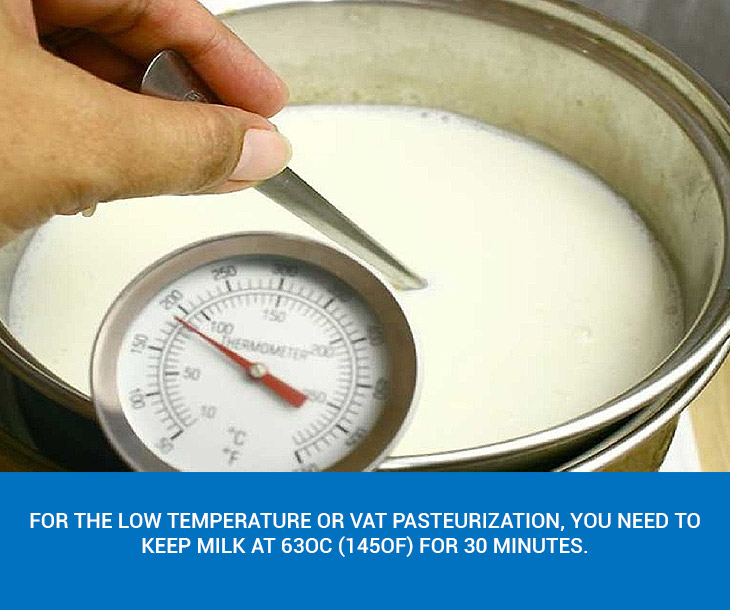
For low-temperature or VAT pasteurization, you need to keep milk at 63oC (145oF) for 30 minutes. This approach allows you to retain the texture and taste and is best for batch pasteurization. You could use a double boiler for this method, but it’s better to invest in a pasteurizer that will keep milk at the required temperature without needing you to watch over it. Advanced models will even cool the milk down after it’s processed.

HTST is the most common technique. It requires you to keep milk at 72oC (161oF) for just 15 seconds. This approach is feasible for home use and can be executed without any additional tools other than a cooking thermometer.

Ultra-high-temperature pasteurization will need you to heat milk to 138oC (280oF) and keep it at this level for only two seconds. However, this approach also involves sterilized packaging and is very hard to execute at home because it requires many additional tools. UHT pasteurization is used by manufacturers. It allows them to produce shelf-safe milk that doesn’t require refrigeration until it’s opened.

Ultra-high-temperature pasteurization

How Long Can You Store Pasteurized Milk?

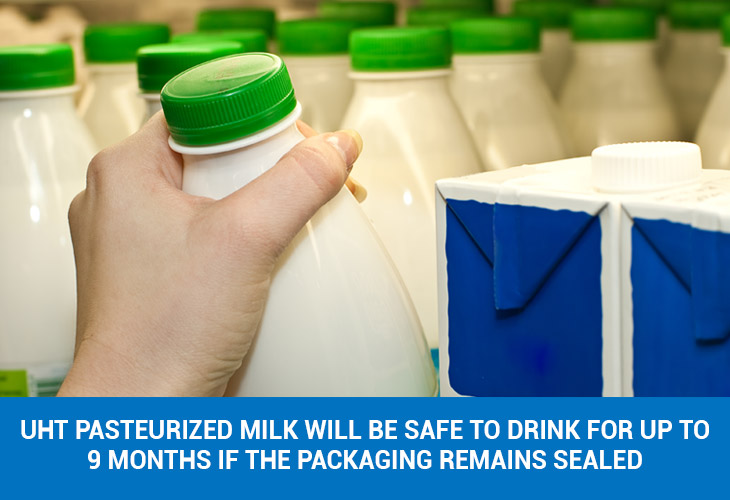
Obviously, the UHT method is the most beneficial in terms of shelf life. Such milk will be safe to drink for up to nine months if the packaging remains sealed.

HTST and VAT pasteurization are much easier to do at home. You can store such milk in the fridge at around 4oC (40oF) for up to two weeks. However, make sure you pasteurize it as soon as possible after it is gathered.

Unless you sell dairy and the government requires you to process it, it’s up to you whether you pasteurize your milk or not. Many people don’t feel safe drinking raw milk, so it’s useful to be aware of pasteurization methods in order to lower the risk of illnesses or other negative reactions.